Our plan is to write the next generation curriculum for the Shuttleworth Foundation's vision, and a process for doing so. Nineteen of us are sitting around the table, one is taking the official notes (mine are not official). The essentials have been provided: coffee and tea, wireless.
Mark: How do students develop communications and analytical skills and how might technology catalyze the aquisition of these skills?
Problem: mathematics is increasingly failing to hook kids' attention, with new math teachers ever harder to recruit. Yet technology is invading the education sector, plus students are spontaneously attracted to technology. How can we capitalize on both trends? How might we continue to deliver analytical capacity in this climate of declining interest in traditional mathematics learning and teaching?
There's no time to retrain the teachers, so the model should implement a peer-based system, wherein students are expected to mentor other students.
Mark's current vision is to start kids with Logo, then maybe move on to Squeak, then Python. That's a rough first take. We have the Scheme community represented at the table as well.
My comment: if there's a lot of broadband in this picture, access to technologically literate teachers shouldn't be the bottleneck. We can project video clips at will, including of talking heads, and about any topic. So it's not like there won't be a variety of adult role models presented. Even live interviews are possible. Guido: assuming the presence of broadband or a projector may not be realistic. Mark: pervasively only in the long term. May we at least assume an ability to play DVDs, and to burn them? Yes.
Other comments: we're talking about acquiring identity, not just skills, which relates to language and a cultural context. What is my role in the community, what are my community's values? The concept of "literacy" covers this, in that becoming literate involves creating one's life story. And this doesn't just happen in schools, especially given the Internet.
Let's focus on the analytical component, the mathematics. Computers enable kinds of mathematics that's difficult to do in other ways. And let's enlarge the analytic to embrace the sciences, which adds the modeling dimension, makes the math stories be about reality. Purely analytical capability may be perverse and/or shallow if not grounded.
Alan Kay pointed out that a curriculum needs to include powerful ideas, not just turn students loose, expecting them to reinvent the calculus. Developing problem solving skills must include exposure to powerful cultural inventions. Cultural memory is important.
Alan sure talks about the 1960s a lot. Guido expressed some frustration with that.
My suggestion: set up test beds, modeling existing and expected conditions, and develop curriculum segments in the field (the test driven development model). Implement a prototype branded curriculum in a pure form and let others copy what works. I'm hoping to avoid this pitfall: something imposed top-down on unwilling participants results in backlash and sabotage, or simply a diluted or distorted version, giving ammo to the curriculum's enemies and making outcomes hard to measure.
Alan thinks being able to script without having to type is super important, plus he wants a media rich experience, not just a turtle. He also advocates the one wireless laptop per child model, meaning you get to take them home. His emphasis is consistently constructing a "world" for children, some customized multimedia GUI ala Squeak, although he thinks this could just as well be done in Python. Alan is a big hypercard fan and is aware of the PythonCard project.
I'm especially skeptical on this last point. Let's focus on a distro perhaps (like edubuntu) but not over-integrate the environment to make something more seamless then necessary. Leave the environment heterogenous, more like the real world. I'm also finding that IM (instant messaging) motivates somewhat older kids to improve their typing skills.
I sense a tension between inspiring teachers versus bypassing them. Probably what we're doing is pioneering an open source culture devoted to curriculum development (not just software development) which includes and inspires some teachers, but leaves others feeling bypassed -- a typical outcome, not really a problem.
What Alan and I most agree on is the need for Wikipedia type content to mix with an interactive component. He showed me his recent Javascript implementation of Logo. I'm reminded of our ability to create interactive "labs" in the J language. Python needs a more developed interactive teaching module: show some stuff, give students a command line, show more stuff, and so on.
Lunch activity: demo of LAMS by its author, James Dalziel. Good use of chat rooms to facilitate peer to peer communications.
The breakout sessions were on the following topics: landscape 2010 (what will the ecology be like?); implementation of innovation (how will these new memes spread?); the role of the teacher in this new technology-based curriculum.
The landscape group expects at least a computer lab in most schools. We can't assume students will have access to a computer at home.
The implementation group is faced with a somewhat monolithic set of scored national tests, and debated what balance of collaborative vs. subversive tactics would work best. Recruiting teachers would involve empowering them as peer contributors to a lessons repository.
The teacher's role group assumed universities would help with teacher trainings and managing the courseware repositories. Shall we hold on to the notion that teachers must "know more" than their students, in order to be effective?
Coffee break. Warding off jet lag.
A branded distro, like edubuntu, with built-in links to further resources (LAMS workflows, moodles...), would give users access to a shared open source culture of curriculum development, not just software development. As a peer, I'd be patched into an ecology, a network, as I am now, but with more people self-consciously contributing. The ecology will feature many competing brands, not one monolithic sequence. Some curricula will be more tailored to specific national, regional and/or company standards.
Showing posts sorted by relevance for query Shuttleworth. Sort by date Show all posts
Showing posts sorted by relevance for query Shuttleworth. Sort by date Show all posts
Thursday, April 13, 2006
Saturday, April 14, 2007
Rebooting Mathematics
Originally posted to Math Forum @ Drexel, hyperlinks added.
Back in the 1980s/90s I was suggesting a "makeover", then as now a popular genre on TV (plastic surgery channel, or just playing dress up). But the downside of such a meme is its "purely cosmetic" spin, inapplicable as that connotation may well be in specialcase.
So the new campaign uses words like "reboot" more often, while keeping "makeover" as a runner up.
Central to the reboot is this new focus on energy. We have Sol (our sun) like 92 million miles distant, as a primary source, and the relative vacuum of space (out past the orbiting junk heap) as our energy source. In between is what Dorion Sagan and others call the "solar gradient", which humanity rides kind of like a beach bum rides a surf board, piggy-backing on this vast tsunami of energy income courtesy of what Pharoh Akhenaten recognized as our biggest physical energy sponsor in these parts, to the tune of many terawatts per capita over an average lifetime.
What we then do is break this energy down into cycles, mainly the shorter swing weather cycles within the longer swing climate cycles, and our ability to tap in to those with "water wheel" technology, meaning these turbine like things (or literal turbines), feeding into the various distribution grids to the offices and homes and such, where the voltage is stepped down to like 220/110 at 50/60 cycles (visit geni.org for more info).
The mathematics comes in early, as we attach precise and engineeringly significant numbers to this picture, using spreadsheets, computer simulations or whatever you school curriculum experts have signed up for (as a parent, you may be downloading or purchasing at Fry's -- make sure you push for that homeschooler tax deduction as these supplies needn't be paid for twice). Solar gradient kwhs convert to grid kwhs which in turn convert to calories and kilocalories, joules and kilojoules. This is where we get to the food labels and the whole Super Size Me discussion around malnutrition (over as well as under -- an important component of any serious-minded public spirited self health curriculum, and just as appropriate under the heading of math).
Of course by now the purists are starting to object about all the french fries and milk shakes we're discussing, taking seriously as solar gradient income (hydrocarbons cycle). This sounds more like science class. But your counter, as one of the "gnu math" trained, is to remind parents that "geometry" is really "earth measure" and said earth is an actual planet, ours, Earth or Spaceship Earth as your text may call it.
We're not using K-12 as a platform to promote some psychological "disconnect" from the "real world" ala some of the negative press about Ivory Tower PhD level math (much of it undeserved). That's not a goal. Pursue that brand of necromancy in college or in private scholarship if you like, but don't take it as a sign of weakness that we're anchored in the astronomical and geological data bases, when it comes to getting our most primitive concepts across. We're not about turning our back on Animal Planet. The object oriented paradigm (OOP), intrinsic to our self-executing math notations, is especially vested in animals and animation, per the various geek-architected pipelines already well described in this Math Forum archive.
That being said, don't therefore misassume we don't have proofs. Our grounding in real world open source energy planning type curricula does not mean we're unable to justify and/or prove the logical consistency of our approach, by a lot of the same means used by the competition i.e. by those otherworldly philosopher types, steeped in their continuum metaphysics ala the calculus. Discrete math engineering, at the higher levels, is well typified by such texts as Concrete Mathematics (sometimes used at Stanford) and Donald Knuth's The Art of Computer Programming. We're not apologetic for our more digital spin, think it flies, carries water, plus leads to interesting careers for our grads. Your mileage may vary.
Related Reading:
Brainstorming About an Early 21st Century Technology Curriculum (Shuttleworth Summit)
Back in the 1980s/90s I was suggesting a "makeover", then as now a popular genre on TV (plastic surgery channel, or just playing dress up). But the downside of such a meme is its "purely cosmetic" spin, inapplicable as that connotation may well be in specialcase.
So the new campaign uses words like "reboot" more often, while keeping "makeover" as a runner up.
Central to the reboot is this new focus on energy. We have Sol (our sun) like 92 million miles distant, as a primary source, and the relative vacuum of space (out past the orbiting junk heap) as our energy source. In between is what Dorion Sagan and others call the "solar gradient", which humanity rides kind of like a beach bum rides a surf board, piggy-backing on this vast tsunami of energy income courtesy of what Pharoh Akhenaten recognized as our biggest physical energy sponsor in these parts, to the tune of many terawatts per capita over an average lifetime.
What we then do is break this energy down into cycles, mainly the shorter swing weather cycles within the longer swing climate cycles, and our ability to tap in to those with "water wheel" technology, meaning these turbine like things (or literal turbines), feeding into the various distribution grids to the offices and homes and such, where the voltage is stepped down to like 220/110 at 50/60 cycles (visit geni.org for more info).
The mathematics comes in early, as we attach precise and engineeringly significant numbers to this picture, using spreadsheets, computer simulations or whatever you school curriculum experts have signed up for (as a parent, you may be downloading or purchasing at Fry's -- make sure you push for that homeschooler tax deduction as these supplies needn't be paid for twice). Solar gradient kwhs convert to grid kwhs which in turn convert to calories and kilocalories, joules and kilojoules. This is where we get to the food labels and the whole Super Size Me discussion around malnutrition (over as well as under -- an important component of any serious-minded public spirited self health curriculum, and just as appropriate under the heading of math).
Of course by now the purists are starting to object about all the french fries and milk shakes we're discussing, taking seriously as solar gradient income (hydrocarbons cycle). This sounds more like science class. But your counter, as one of the "gnu math" trained, is to remind parents that "geometry" is really "earth measure" and said earth is an actual planet, ours, Earth or Spaceship Earth as your text may call it.
We're not using K-12 as a platform to promote some psychological "disconnect" from the "real world" ala some of the negative press about Ivory Tower PhD level math (much of it undeserved). That's not a goal. Pursue that brand of necromancy in college or in private scholarship if you like, but don't take it as a sign of weakness that we're anchored in the astronomical and geological data bases, when it comes to getting our most primitive concepts across. We're not about turning our back on Animal Planet. The object oriented paradigm (OOP), intrinsic to our self-executing math notations, is especially vested in animals and animation, per the various geek-architected pipelines already well described in this Math Forum archive.
That being said, don't therefore misassume we don't have proofs. Our grounding in real world open source energy planning type curricula does not mean we're unable to justify and/or prove the logical consistency of our approach, by a lot of the same means used by the competition i.e. by those otherworldly philosopher types, steeped in their continuum metaphysics ala the calculus. Discrete math engineering, at the higher levels, is well typified by such texts as Concrete Mathematics (sometimes used at Stanford) and Donald Knuth's The Art of Computer Programming. We're not apologetic for our more digital spin, think it flies, carries water, plus leads to interesting careers for our grads. Your mileage may vary.
Related Reading:
Brainstorming About an Early 21st Century Technology Curriculum (Shuttleworth Summit)

Sunday, March 26, 2017
N8V American
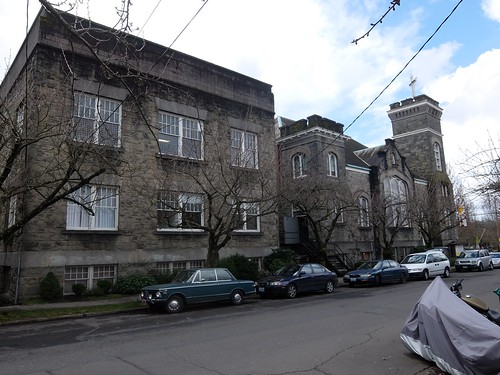
The Indian Wars are cranking up again, with the Yanqui drive to nail down the borders once and for all. Reclassifying Latinos, from Hispanic to Native American, is not exactly what's going on, as many Pueblo are happy with "Pueblo" and don't need to care what's put on the check boxes.
The US president's visit to the tomb of Andrew Jackson was a signal to the General Custer types to become more militant about reporting when indigenous folk might be migrating in violation of Ranger rules. Incarceration is the big industry, next to human trafficking. Bounty hunters keep queuing at Information, asking when and where to saddle up.
I've been suggesting our Third Party (we could call it that) get advisers among the Born Free (or Free Born) of South Africa, those emerging from a post-Apartheid zone. A spirit of "not waiting for the government to do it" should warm the hearts of church-going citizens, eager to return social services to the pastor class. Does your Meeting get hip hop yet?
Quakers were never fans of the Indian Wars, preferring to do business among equals and profit all around. They were already heavy into negotiations with the locals when the Indian Wars were declared, and briefly pressed into service afterwards, as minions in charge of Boarding Schools. AFSC got an earful that year in Philadelphia, when I was a corporate delegate from NPYM.
I just got off the phone with Maureen Long. She's a part of the extended Methodist community around Portland and so of course knows Pat, who thought I'd be female when we met, based on my name Kirby (she's a she). I'll join one of their Wednesday feedings at Ghost Church (what I call it) in Sunnyside, when Maureen gets over her "case of the time zones" (she's recently back from west Thailand, visiting a son).
My Third Party, just revving its engines (no candidates yet, more like a record label) cares a lot about voting technology, wants a lot more openness, a lot like the California's Pirate Party, a natural ally.
We care all year around about polling and voting infrastructure and agitate to let US public schools feature said technology as a part of what students learn about and understand. Where are the museums about Vote Tech?
All the more reason to keep it open source.
Quakers tend to use consensus in Business Meeting however that only works when clerks have done sufficient homework ahead of time to smooth a path ahead for whatever minutes. The process is time-consuming and we call ourselves Friends for a reason. Come role play and discover your own talents.
That being said, among strangers or ships in the night, one expects a different system. Voting has its place, as does polling, and the infrastructure is progressing with leaps and bounds, given WiFi and encryption. Universities don't need to wait for governments to give their student bodies more practice.
Closed source elections with no audit trails have far less legitimacy, and contribute to the Banana Republic quotient, now skyrocketing in North America.
Our Third Party gains an edge simply by pointing to the sullied reputations of the colluding parties, which have aided and abetted, not to mention covered up, the dirty tricks in some cases. With nothing to lose, we have everything to gain.
Sure, universities here in North America might have some stake in more transparent elections, but don't they depend on the largess of Congress in many districts? How eager is Congress to invite more transparency in the electoral process I wonder? Do we see any signs of dawning awareness yet?
South Africa, home of Chappie and Die Antwoord is more liberal about sharing the bash shell with more ethnic groups, through Shuttleworth Foundation tuXLabs and so on. North Americans still suffer under the tyranny of TI.
I focus on these more liberal policies in my recent Is Code School the New High School?, which looks at all these connections in more detail.
On another topic, just to clarify: "Project Truckistan" is about more open borders for truck drivers, not just in terms of fewer mandatory check stops along the lanes, but in terms of getting to exchange truck routes more readily.
Get good in Ukraine and South Africa both. Give labor (work-study people) the freedom to move, not just their pseudo-human corporate employers. Cross-trained truckers might also serve as tour guides, two revolving door careers.
True, not everyone drives on the same side of the road, nor in all weather conditions. I was not suggesting dispatching drivers purely randomly was I? Transcripts matter.
The trucking issue comes up around truck routes in the Americas as well. How long must trucks sit in line waiting at borders or weigh stations? People tend to favor a policy of keeping the borders open between states in Lower48. Other regions of the world would like more of that freedom too.
We may need big data to help us on the metrics, and universities like MIT, or that one in Austin. I've not put any Jupyter Notebooks out on that myself, with or without Bokeh. Perhaps the Google Earth team will show some leadership in this area? We shall see.
The US president's visit to the tomb of Andrew Jackson was a signal to the General Custer types to become more militant about reporting when indigenous folk might be migrating in violation of Ranger rules. Incarceration is the big industry, next to human trafficking. Bounty hunters keep queuing at Information, asking when and where to saddle up.
I've been suggesting our Third Party (we could call it that) get advisers among the Born Free (or Free Born) of South Africa, those emerging from a post-Apartheid zone. A spirit of "not waiting for the government to do it" should warm the hearts of church-going citizens, eager to return social services to the pastor class. Does your Meeting get hip hop yet?
Quakers were never fans of the Indian Wars, preferring to do business among equals and profit all around. They were already heavy into negotiations with the locals when the Indian Wars were declared, and briefly pressed into service afterwards, as minions in charge of Boarding Schools. AFSC got an earful that year in Philadelphia, when I was a corporate delegate from NPYM.
I just got off the phone with Maureen Long. She's a part of the extended Methodist community around Portland and so of course knows Pat, who thought I'd be female when we met, based on my name Kirby (she's a she). I'll join one of their Wednesday feedings at Ghost Church (what I call it) in Sunnyside, when Maureen gets over her "case of the time zones" (she's recently back from west Thailand, visiting a son).
My Third Party, just revving its engines (no candidates yet, more like a record label) cares a lot about voting technology, wants a lot more openness, a lot like the California's Pirate Party, a natural ally.
We care all year around about polling and voting infrastructure and agitate to let US public schools feature said technology as a part of what students learn about and understand. Where are the museums about Vote Tech?
All the more reason to keep it open source.
Quakers tend to use consensus in Business Meeting however that only works when clerks have done sufficient homework ahead of time to smooth a path ahead for whatever minutes. The process is time-consuming and we call ourselves Friends for a reason. Come role play and discover your own talents.
That being said, among strangers or ships in the night, one expects a different system. Voting has its place, as does polling, and the infrastructure is progressing with leaps and bounds, given WiFi and encryption. Universities don't need to wait for governments to give their student bodies more practice.
Closed source elections with no audit trails have far less legitimacy, and contribute to the Banana Republic quotient, now skyrocketing in North America.
Our Third Party gains an edge simply by pointing to the sullied reputations of the colluding parties, which have aided and abetted, not to mention covered up, the dirty tricks in some cases. With nothing to lose, we have everything to gain.
Sure, universities here in North America might have some stake in more transparent elections, but don't they depend on the largess of Congress in many districts? How eager is Congress to invite more transparency in the electoral process I wonder? Do we see any signs of dawning awareness yet?
South Africa, home of Chappie and Die Antwoord is more liberal about sharing the bash shell with more ethnic groups, through Shuttleworth Foundation tuXLabs and so on. North Americans still suffer under the tyranny of TI.
I focus on these more liberal policies in my recent Is Code School the New High School?, which looks at all these connections in more detail.
On another topic, just to clarify: "Project Truckistan" is about more open borders for truck drivers, not just in terms of fewer mandatory check stops along the lanes, but in terms of getting to exchange truck routes more readily.
Get good in Ukraine and South Africa both. Give labor (work-study people) the freedom to move, not just their pseudo-human corporate employers. Cross-trained truckers might also serve as tour guides, two revolving door careers.
True, not everyone drives on the same side of the road, nor in all weather conditions. I was not suggesting dispatching drivers purely randomly was I? Transcripts matter.
The trucking issue comes up around truck routes in the Americas as well. How long must trucks sit in line waiting at borders or weigh stations? People tend to favor a policy of keeping the borders open between states in Lower48. Other regions of the world would like more of that freedom too.
We may need big data to help us on the metrics, and universities like MIT, or that one in Austin. I've not put any Jupyter Notebooks out on that myself, with or without Bokeh. Perhaps the Google Earth team will show some leadership in this area? We shall see.
Friday, May 02, 2008
Legally Free
 This is one of my favorite philanthropic projects, aimed at getting more free music samples and production tools to those eager to express themselves musically.
The challenges facing artists in rural areas and regions with limited connectivity are also overcome. “Music production, for one, can be very expensive,” insists Hudson. “The software required costs thousands of Rands and music samples are also expensive, making it difficult for musicians to express themselves. With the Freedom Toaster, artists will now be able to obtain the tools and other materials needed for their work, irregardless of their Internet connectivity and for free.”Or, if it's not specifically music that interests you, but computers more generally, the Freedom Toaster is potentially a goldmine of legally free assets and information. Just make your selections, insert your CDs, and burn. Get what might take days to download, in just minutes.
 The Shuttleworth Foundation
Republic of South Africa
Tuesday, May 26, 2015
Memorial Day
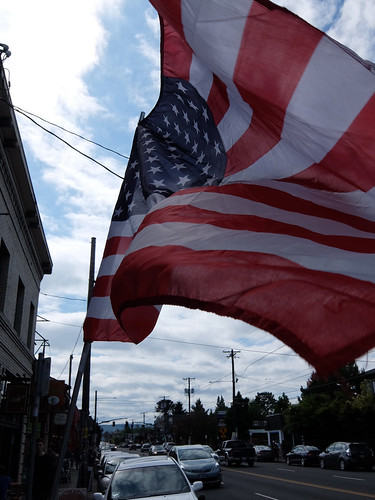
People were out in droves in my neighborhood, enjoying those establishments choosing not to close for the holiday, but stay open.
I'm reminded of my quick visit to London Knowledge Lab on a bank holiday when no one sane would be at work. But a kind Lab guy, knowing my itinerary (guest of Shuttleworth Foundation, hot off a jet from Pacific Northwest), realized it was now or never. I gave a presentation. The gig was recorded and for many years made the rounds, plus I got to brag to the Foundation folk I'd already briefed LKL, sounded important.
This year, 2015, I drove Deke, a fine fellow, on an errand to Dr. Bolton's hood, out Tryon way. We stopped in to visit with Sir Charles, an emeritus sociology department chairman and contemporary of my dad's. The Boltons started to tune in Urners at University of Chicago, but then went their separate ways. Not until they got together again in Portland did the conviviality really develop, such that when we moved to Rome, we made the trip to Positano, to hang with the Boltons, on sabbatical.
The intersection top of Boones Ferry, where Stephenson T's in: that's been a rough corner and a lot of redesign has gone into it recently, I think for the better. This was my landing quad i.e. my starting sector in the World Game of Portland I started playing, off the plane from Bangladesh. Mom & Dad were pulling up stakes there, I'd gone to help them pack up, take another look around Dhaka, and then I stayed with the Boltons rather than resume an East Coast existence. Time to get back to my Portland roots.
The Nissan has a fuel system issue that I'll trace to poor maintenance on my part, casting no aspersions on Nissan for this one. The Altima I drove to and from, on my recent mid-west tour (St. Louis MO etc.), was a world class motor vehicle. I like how rental car scenarios let us try before we buy, or rent again, or whatever. Anyway, the Maxima bucks like a bronco sometimes, even shutting off. Good thing it's OK to restart in neutral. But hey, Deke and I both remarked how overall smooth the whole trip was.
Funny part: Charles was just showing us a postcard from Maureen, in dense handwriting, and saying he thought she might still be in Europe when, knock knock, there she was at the door, pretty funny. I alerted them to Carol's immanent arrival and suggested we all get together again soon, Deke included (he liked our energy, think he might join).
Maureen was at the WILPF Centennial like mom was, with her son Erin in a supportive role.
Mom did a lot of her five weeks solo, also tackling NYC YMCA on her own (for visits with UN people) and DC. She routed herself back to LAX via JFK and fortunately made standby on JetBlue, shortening her stay in JFK by a good six hours, way to go Carol! She said she'd gladly take JetBlue again.
The day before, I got together with my friends the Gunnells, new in Portland. I took pictures at the wedding, my former co-worker Eddy's daughter the bride. Eddy and I were high school teachers at St. Dominic Academy, for girls (young women) in Jersey City, New Jersey. That was back in the 1980s, great gig!
Wednesday, July 23, 2008
Making History
Our cult leader Tim O'Reilly is helping launch OSCON 10 (or The Perl Conference 12), encouraging us to keep chronofiles (logs, journals, personal accounts, autobiographies).
The open source trajectory, as popularized by Eric Raymond in the 1990s, using this quote attributed to Gandhi: first they ignore us, then they laugh at us, then they fight us... then we win.
Django, Alfresco, Zimbra, Drupal, memcached... these are topics on the uptick (over 200% growth rate). Python is up a respectable 56%. Tim is good at this kind of reporting.
Big Challenges and Opportunities: cloud computing, programmable web and open mobile. We can't take for granted that our current strategies for keeping software liberal will remain all that relevant in the cloud.
Decentralization, increased participation... these are our values. Hadoop, Eucalyptus, 10gen, Drizzle, Reasonably Smart Platform...
The Web 2.0 API directory shows mashups are data-oriented (bookmarks... GIS), i.e. the component subsystems will be data-oriented in many cases. Programming Collective Intelligence is the recent popular O'Reilly title on this subject. Dopplr...
Many companies today well understand how they depend on their newly won freedoms, want to keep platforms, including mobile platforms, open. Let's keep wrestling with angels (i.e. lets work on what's hard, not rest on our laurels, really make freedom ring).
On the nanotech front, Christine Peterson of the Foresight Nanotech Institute: sensing is proceeding by leaps and bounds, with lots of dystopian possibilities as a consequence.
Christine somewhat blames the open source community for not staying out in front on the voting machine issue, when push came to shove. I'd say some of us tried, but those seeking to sustain the status quo of corrupting elections have friends in high places, an old problem in democracies. In fighting back, transparency is our weapon of choice.
But then not enough surveillance is also a problem, leads to bad data, bad decisions, criminal behavior, such as that cruise missile attack on that Sudanese pharmaceutical plant in 1998 under Clinton (her apropos example). The overly paranoid indulge in sociopathic behaviors -- not a new problem. Better data (better reality checks) provide an antidote in some cases.
So how do we do adequately police against dangerous substances and/or crazy schemes while preserving individual privacy i.e. how do we have freedoms and security at the same time? Does detecting one pot molecule mean emptying the meeting hall for mandatory breath testing? When shall we anonymize data?
Christine thinks our geek community needs to figure this stuff out, as DC isn't doing it intelligently, is ignorantly and misguidedly top-down in its approaches, using inappropriate tool sets. Thomas Jefferson and Ben Franklin were founding geeks, we should get inspiration from them.
Would these talking points help: no secret software for public sensing data; no secret software for public voting data? There's a difference between software and data though. We need some more clarity here.
Overhearing geeks later, I heard both discomfort and relief over the fact that keynoters would take such bulls by the horns (brave of them -- geeks with courage, imagine that).
 Tim is interviewing MySQL principals about their acquisition by Sun.
Sun is an old engineering company making some of the same adjustments IBM had to make when embracing Linux (my spin), as now engineers used to writing secret code have that feeling of perfect strangers scanning their source (an uncomfortable feeling sometimes).
Tim is reminding us of our original Unix philosophy (related to Shuttleworth's emphasis on designing for extensibility): get a lot of pieces that work together in potentially unexpected ways (through hacking), each doing one thing well, don't always think you need to reinvent the wheel by writing these large monolithic monsters. Cobble together, then render seamless. The open curriculum movement could probably benefit from this lesson.

The open source trajectory, as popularized by Eric Raymond in the 1990s, using this quote attributed to Gandhi: first they ignore us, then they laugh at us, then they fight us... then we win.
Django, Alfresco, Zimbra, Drupal, memcached... these are topics on the uptick (over 200% growth rate). Python is up a respectable 56%. Tim is good at this kind of reporting.
Big Challenges and Opportunities: cloud computing, programmable web and open mobile. We can't take for granted that our current strategies for keeping software liberal will remain all that relevant in the cloud.
Decentralization, increased participation... these are our values. Hadoop, Eucalyptus, 10gen, Drizzle, Reasonably Smart Platform...
The Web 2.0 API directory shows mashups are data-oriented (bookmarks... GIS), i.e. the component subsystems will be data-oriented in many cases. Programming Collective Intelligence is the recent popular O'Reilly title on this subject. Dopplr...
Many companies today well understand how they depend on their newly won freedoms, want to keep platforms, including mobile platforms, open. Let's keep wrestling with angels (i.e. lets work on what's hard, not rest on our laurels, really make freedom ring).
On the nanotech front, Christine Peterson of the Foresight Nanotech Institute: sensing is proceeding by leaps and bounds, with lots of dystopian possibilities as a consequence.
Christine somewhat blames the open source community for not staying out in front on the voting machine issue, when push came to shove. I'd say some of us tried, but those seeking to sustain the status quo of corrupting elections have friends in high places, an old problem in democracies. In fighting back, transparency is our weapon of choice.
But then not enough surveillance is also a problem, leads to bad data, bad decisions, criminal behavior, such as that cruise missile attack on that Sudanese pharmaceutical plant in 1998 under Clinton (her apropos example). The overly paranoid indulge in sociopathic behaviors -- not a new problem. Better data (better reality checks) provide an antidote in some cases.

So how do we do adequately police against dangerous substances and/or crazy schemes while preserving individual privacy i.e. how do we have freedoms and security at the same time? Does detecting one pot molecule mean emptying the meeting hall for mandatory breath testing? When shall we anonymize data?
Christine thinks our geek community needs to figure this stuff out, as DC isn't doing it intelligently, is ignorantly and misguidedly top-down in its approaches, using inappropriate tool sets. Thomas Jefferson and Ben Franklin were founding geeks, we should get inspiration from them.
Would these talking points help: no secret software for public sensing data; no secret software for public voting data? There's a difference between software and data though. We need some more clarity here.
Overhearing geeks later, I heard both discomfort and relief over the fact that keynoters would take such bulls by the horns (brave of them -- geeks with courage, imagine that).
 Tim is interviewing MySQL principals about their acquisition by Sun.
Sun is an old engineering company making some of the same adjustments IBM had to make when embracing Linux (my spin), as now engineers used to writing secret code have that feeling of perfect strangers scanning their source (an uncomfortable feeling sometimes).
Tim is reminding us of our original Unix philosophy (related to Shuttleworth's emphasis on designing for extensibility): get a lot of pieces that work together in potentially unexpected ways (through hacking), each doing one thing well, don't always think you need to reinvent the wheel by writing these large monolithic monsters. Cobble together, then render seamless. The open curriculum movement could probably benefit from this lesson.

Friday, April 14, 2006
Shuttleworth Summit (day two)
Checking edu-sig this morning, from the hotel lobby (Guido is in the chair next to me); André is proposing rur-ple as an alternative to Logo while Ian blogged about his PyLogo.
We had a fantastic dinner at E&O last night. Gunner turns out to be a bigger country music fan than I'd realized.
Today's planning looked at timeline, tools, and content.
A first pass: develop in a fish bowl, in showcase settings, with others invited to adopt and adapt (within three years?). Second pass: package the "final product" for wider dissemination (within five?).
On the tools front, a key question is whether we're tying this project to any major specific software development effort.
Loosely coupled tools, with a bottom-up, open source curriculum writing process, will leave the question of tools somewhat open-ended. The lesson plans will specify the software needed, with multiple paths possible.
Will we eventually have some sort of Python-based hypercard-like browser plug-in, facilitating easy publishing by students and incorporating what's already worked well in Squeak? If yes, then so much the better. Peers i.e. teachers (including the more advanced students) will write lessons around it.
The content will translate a mind map of the whole ten year topics network to a repository of lesson plans, with lessons sortable by how technology intensive they need to be. The content will mostly assume some minimal level of infrastructure: a computer lab with or without the Internet for example. At the topical level, this curriculum should tie to the national standards, to facilitate widespread adoption.
We blitzed through a few five minute lightning talks, featuring South Africa's performance stats in TIMMS, primitive Logo in Javascript, Squeak, a book on Squeak, the Scheme approach to designing programs, a 2D dynamic geometry project not unlike PyGeo in 3D, and me on Python, doing a very abbreviated version of what I showed the London Knowledge Lab on Wednesday.
Robyn encourged me to look at what a contemporary Logo looks like. The slickest stuff is neither free nor cross-platform, even if it runs in a web browser.
Momentum seems to be building for a stronger graphics engine, either 2D or 3D, with Python bindings, that'll run interactively from within a browser. The Squeak folks may be willing to contribute to this effort. Guido feels we'll need to recruit new talent for this, as the Python community is currently pretty maxed out on projects. Should such an engine be developed, turtle stuff would be incorporated therein.
We had a fantastic dinner at E&O last night. Gunner turns out to be a bigger country music fan than I'd realized.
Today's planning looked at timeline, tools, and content.
A first pass: develop in a fish bowl, in showcase settings, with others invited to adopt and adapt (within three years?). Second pass: package the "final product" for wider dissemination (within five?).
On the tools front, a key question is whether we're tying this project to any major specific software development effort.
Loosely coupled tools, with a bottom-up, open source curriculum writing process, will leave the question of tools somewhat open-ended. The lesson plans will specify the software needed, with multiple paths possible.
Will we eventually have some sort of Python-based hypercard-like browser plug-in, facilitating easy publishing by students and incorporating what's already worked well in Squeak? If yes, then so much the better. Peers i.e. teachers (including the more advanced students) will write lessons around it.
The content will translate a mind map of the whole ten year topics network to a repository of lesson plans, with lessons sortable by how technology intensive they need to be. The content will mostly assume some minimal level of infrastructure: a computer lab with or without the Internet for example. At the topical level, this curriculum should tie to the national standards, to facilitate widespread adoption.
We blitzed through a few five minute lightning talks, featuring South Africa's performance stats in TIMMS, primitive Logo in Javascript, Squeak, a book on Squeak, the Scheme approach to designing programs, a 2D dynamic geometry project not unlike PyGeo in 3D, and me on Python, doing a very abbreviated version of what I showed the London Knowledge Lab on Wednesday.
Robyn encourged me to look at what a contemporary Logo looks like. The slickest stuff is neither free nor cross-platform, even if it runs in a web browser.
Momentum seems to be building for a stronger graphics engine, either 2D or 3D, with Python bindings, that'll run interactively from within a browser. The Squeak folks may be willing to contribute to this effort. Guido feels we'll need to recruit new talent for this, as the Python community is currently pretty maxed out on projects. Should such an engine be developed, turtle stuff would be incorporated therein.
Subscribe to:
Posts (Atom)
